Canfield
The casino classic — four foundations built up from a deal-chosen base rank, fed from a thirteen-card reserve.

The casino classic — four foundations built up from a deal-chosen base rank, fed from a thirteen-card reserve.
The deal sets your target: one card is turned up to start its foundation, and its rank becomes the base every foundation begins at. Build all four up by suit from that rank — running past the king and around through the ace when you have to — until each holds thirteen cards.
Four tableau columns start with a single card each and build down in alternating colors, wrapping too, so an ace will happily take a king. Behind them looms the reserve: thirteen cards, only the top one in play. When a column opens up, the reserve claims it — its top card is the only thing allowed there until the reserve runs dry.
The stock flips three cards at a time onto the waste, and you can run through it as many times as you like. Nothing here is hidden except time — the reserve empties one grudging card at a time, and every one you free is a small victory.
Undo is unlimited and stacks back to the deal. If nothing can move, rewind and try a different line — or claim the board is stuck and end it there.
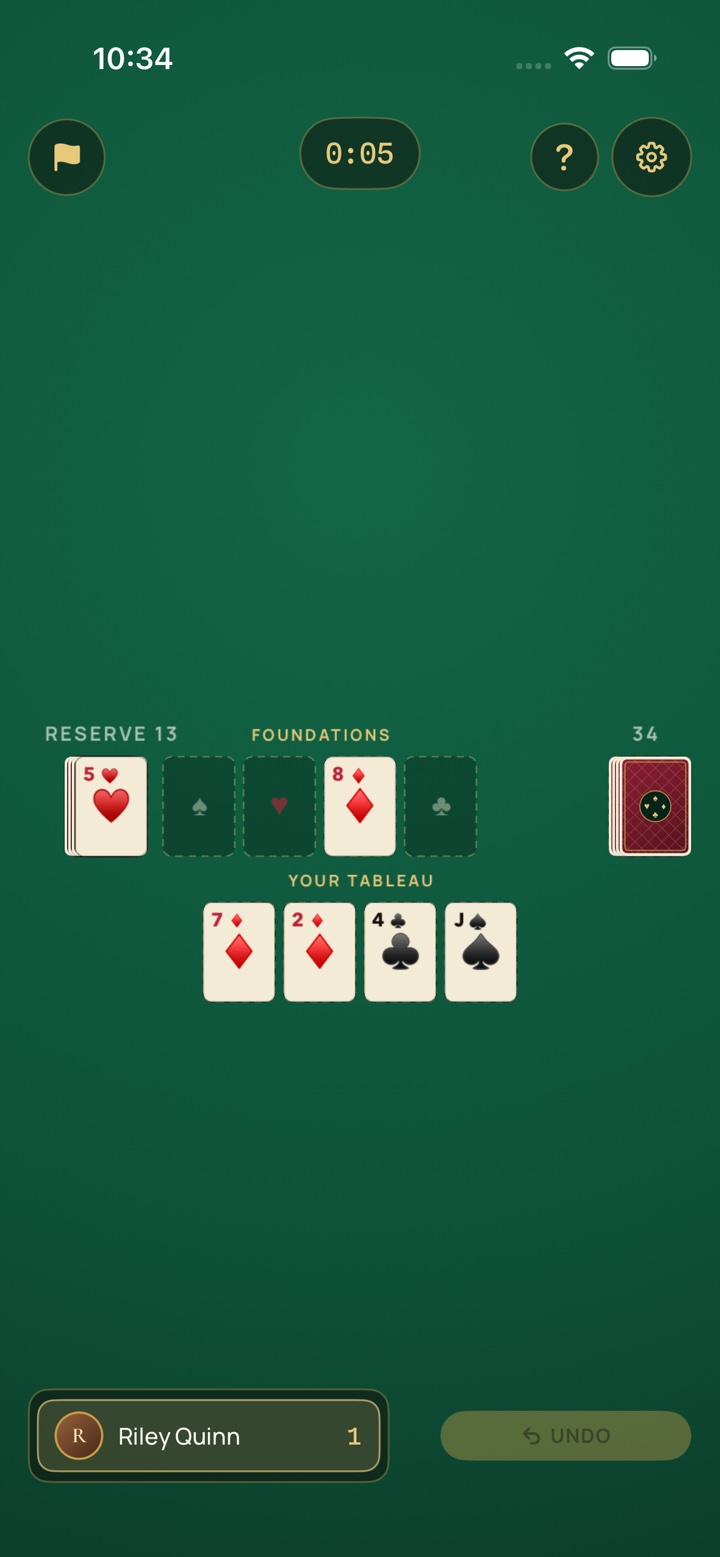
Double Canfield deals both players the identical layout — same base rank, same reserve, same stock order — and starts you together. No turns: you're both digging through the same board at once, and the first to bring all fifty-two cards home wins immediately.
You'll watch your opponent's foundation count climb while you work. If you both grind to a halt — or the match clock expires — the higher count takes it, and a true tie is a draw.
Same deal, same stubborn reserve. The race is over who feeds their foundations faster.
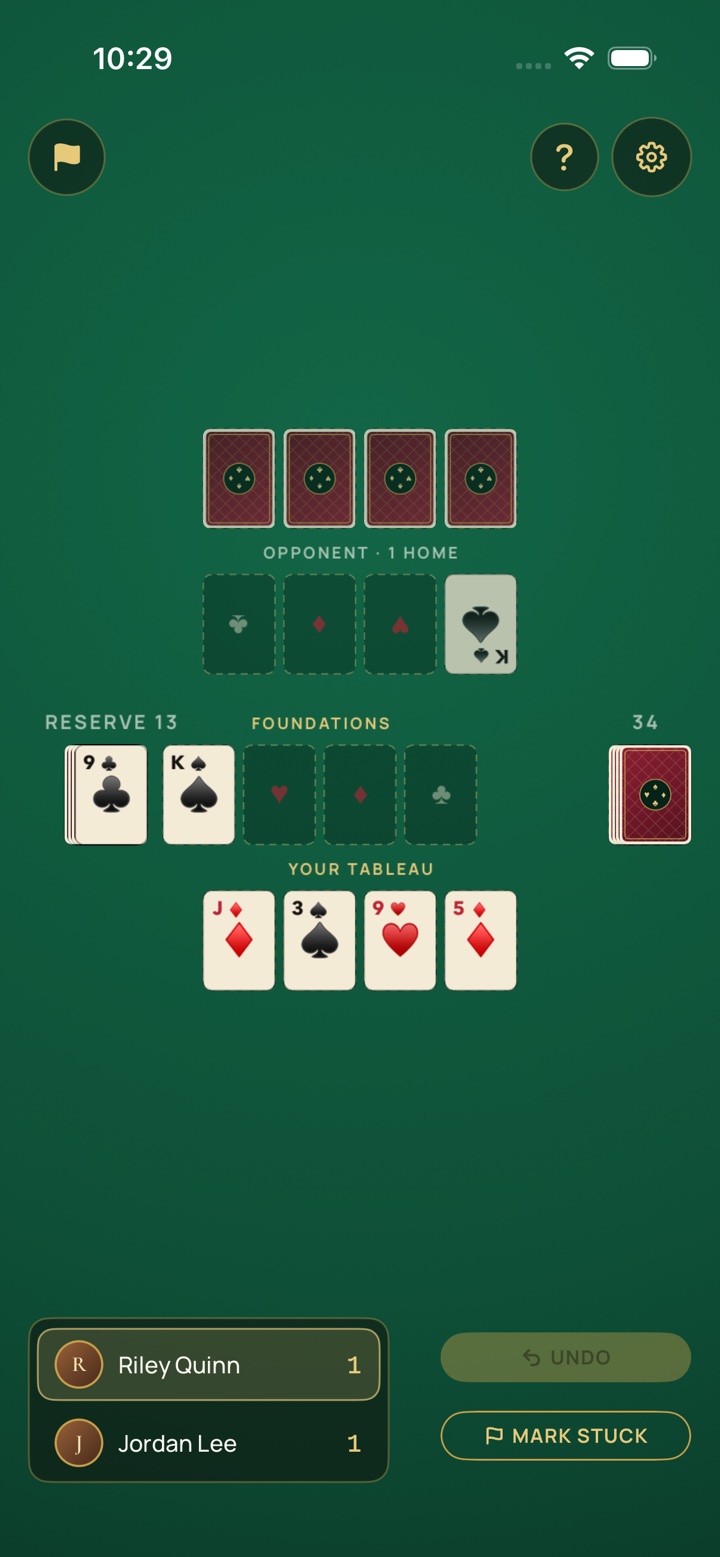
Play it quietly on your own, or race a real opponent. Quick Match seats you in seconds; private lobbies let you pick who's across the table.
Races deal both players the identical layout. Nobody draws the easier board — the only difference is how you play it.
Run a lobby untimed or on a match clock, with reconnect handling that doesn't cost you the game. Solo play whenever you just want a quiet one.