Golf
Thirty-five cards on the course, one long chain to sink them — on your own, or racing someone through the same deal.

Thirty-five cards on the course, one long chain to sink them — on your own, or racing someone through the same deal.
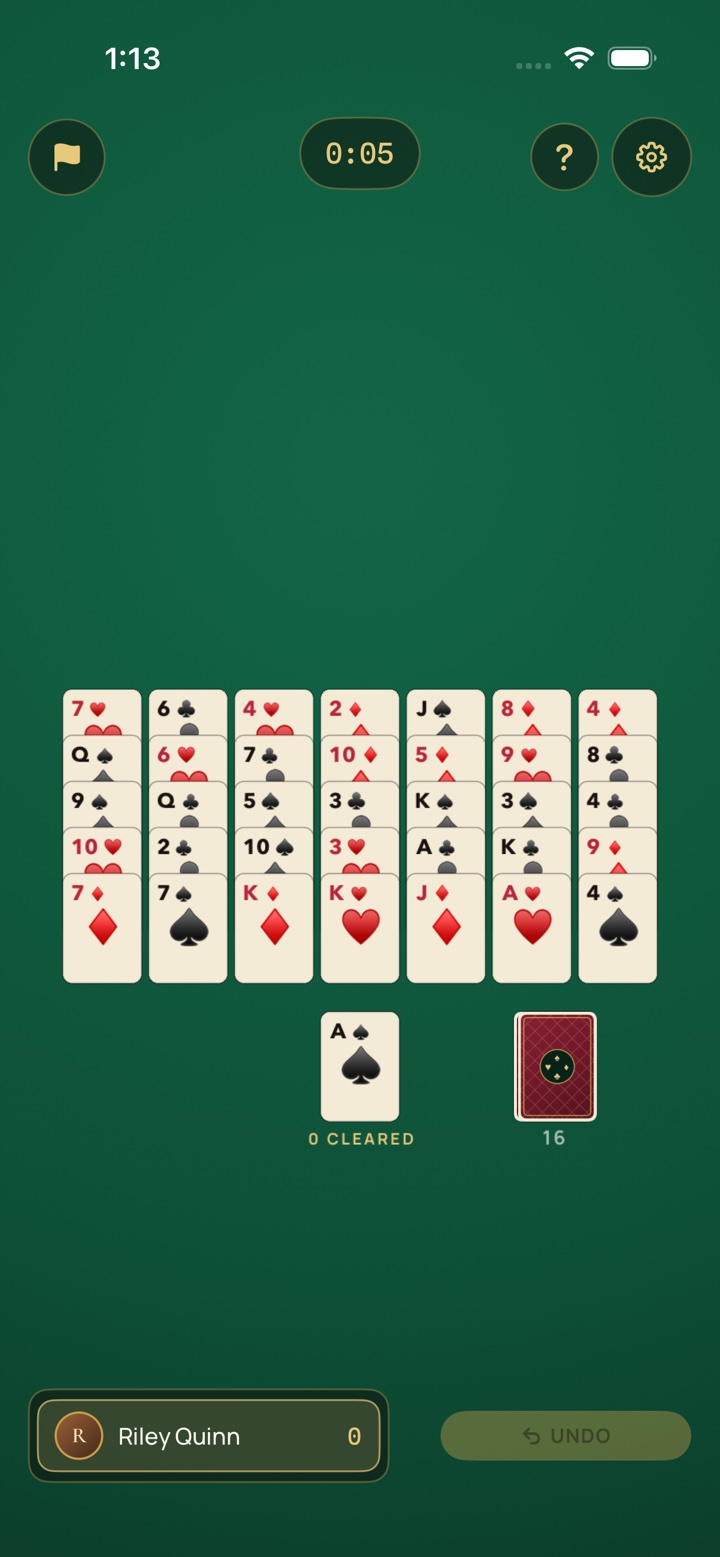
Seven columns of five cards make the course, every one of them face up. Only the card at the front of each column can play; clearing it exposes the one behind. Below the board sit the waste — one card, face up — and a face-down stock of sixteen. Clear all thirty-five course cards and you've won.
Any exposed card one rank above or below the waste top plays straight onto it. Suits never matter, but unlike Tri Peaks the order does not wrap: ace and two are neighbors, while king and ace are not — a king is a dead end you have to plan around. Each card you play becomes the new waste top, so chains run as long as you can keep stepping.
Out of plays? Flip a stock card onto the waste. Sixteen cards, one pass, no recycle — every flip you burn restarting a chain is one you can't spend later.
Undo is unlimited and stacks all the way back to the deal. If the stock is empty and nothing can play, the game says so — take moves back and hunt a better line, or end it there.
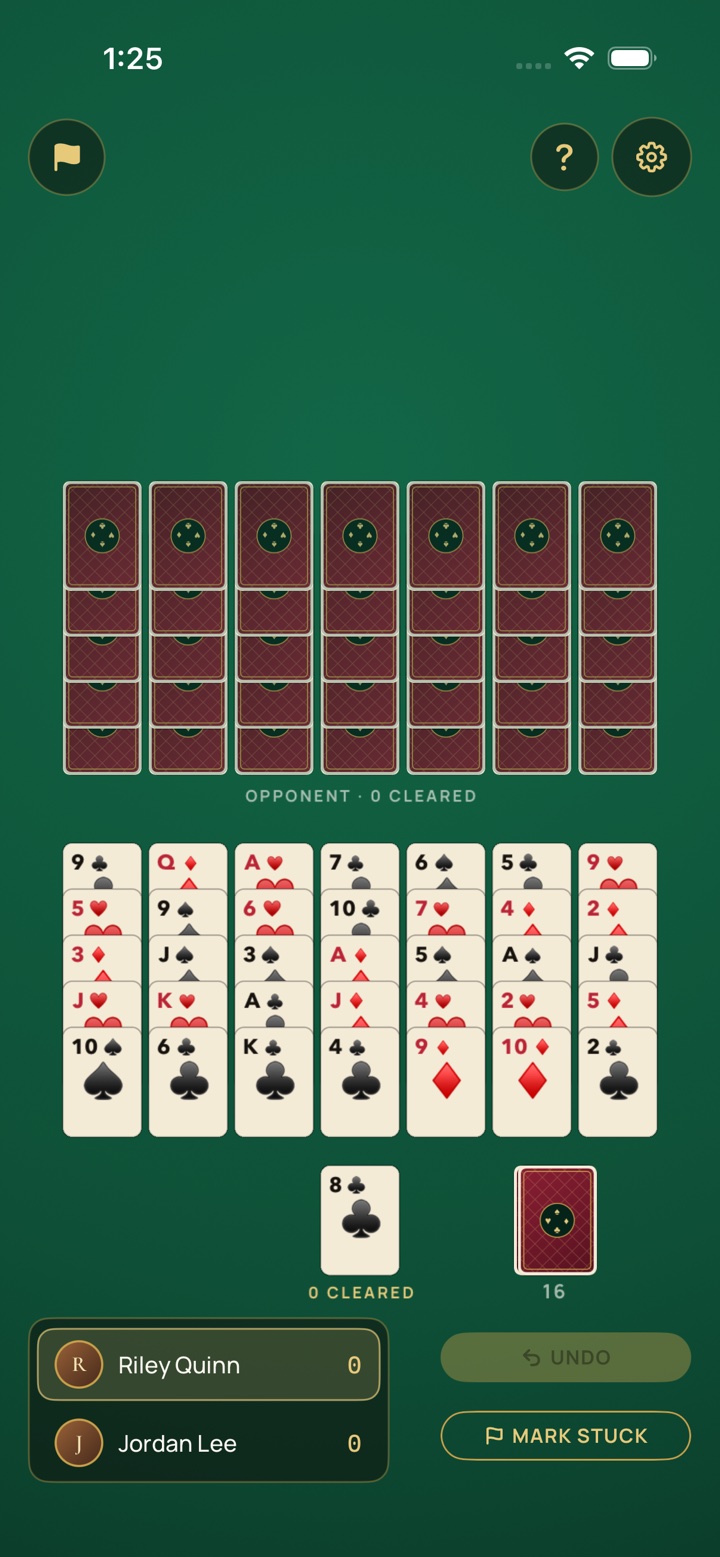
Double Golf deals both players the identical course and starts you together. No turns — you're both sinking the same thirty-five cards at once, and the first to clear the board wins immediately.
Your opponent's cleared count climbs in real time while you play, and you'll see the moment they run out of moves. If you both stall — or the match clock expires — the higher count takes it, and a true tie is a draw.
Same cards, same sixteen-flip stock, same dead-end kings. What separates you is which chain you commit to first.
Play it quietly on your own, or race a real opponent. Quick Match seats you in seconds; private lobbies let you pick who's across the table.
Races deal both players the identical layout. Nobody draws the easier board — the only difference is how you play it.
Run a lobby untimed or on a match clock, with reconnect handling that doesn't cost you the game. Solo play whenever you just want a quiet one.