Pyramid
Pair to thirteen and clear the pyramid — on your own, or racing someone through the same deal.

Pair to thirteen and clear the pyramid — on your own, or racing someone through the same deal.
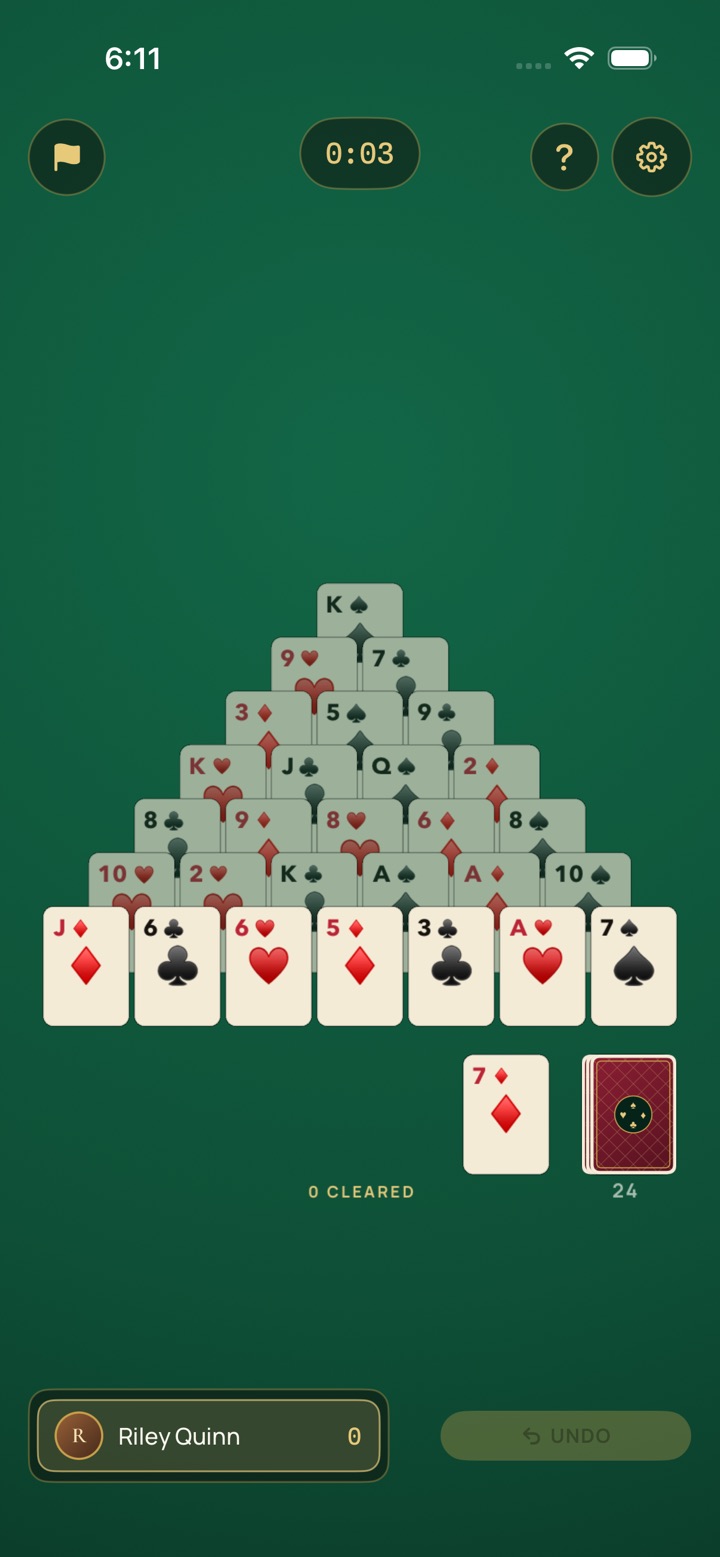
Twenty-eight cards go out face up in seven rows, each one overlapping the two beneath it. The remaining twenty-four wait in the stock. Your job is to take the whole pyramid apart.
Any two exposed cards that add up to thirteen come off together — ace counts one, jack eleven, queen twelve. Kings are worth thirteen on their own, so they clear alone. Nothing is hidden; the difficulty is that every card you want is pinned under two others.
Turn cards from the stock to the waste when the board stalls, and pair against the waste top or the stock's own face-up card. Run out of stock and you can recycle the waste as many times as you like — the order comes back exactly as it was, so a card you passed on is a card you can plan around.
Undo is unlimited and stacks all the way back to the deal. If the board truly has no pairing left, the game tells you so rather than letting you hunt — take moves back and try another line, or end it there. Clear all twenty-eight and the pyramid is yours; whatever's left in the stock doesn't matter.
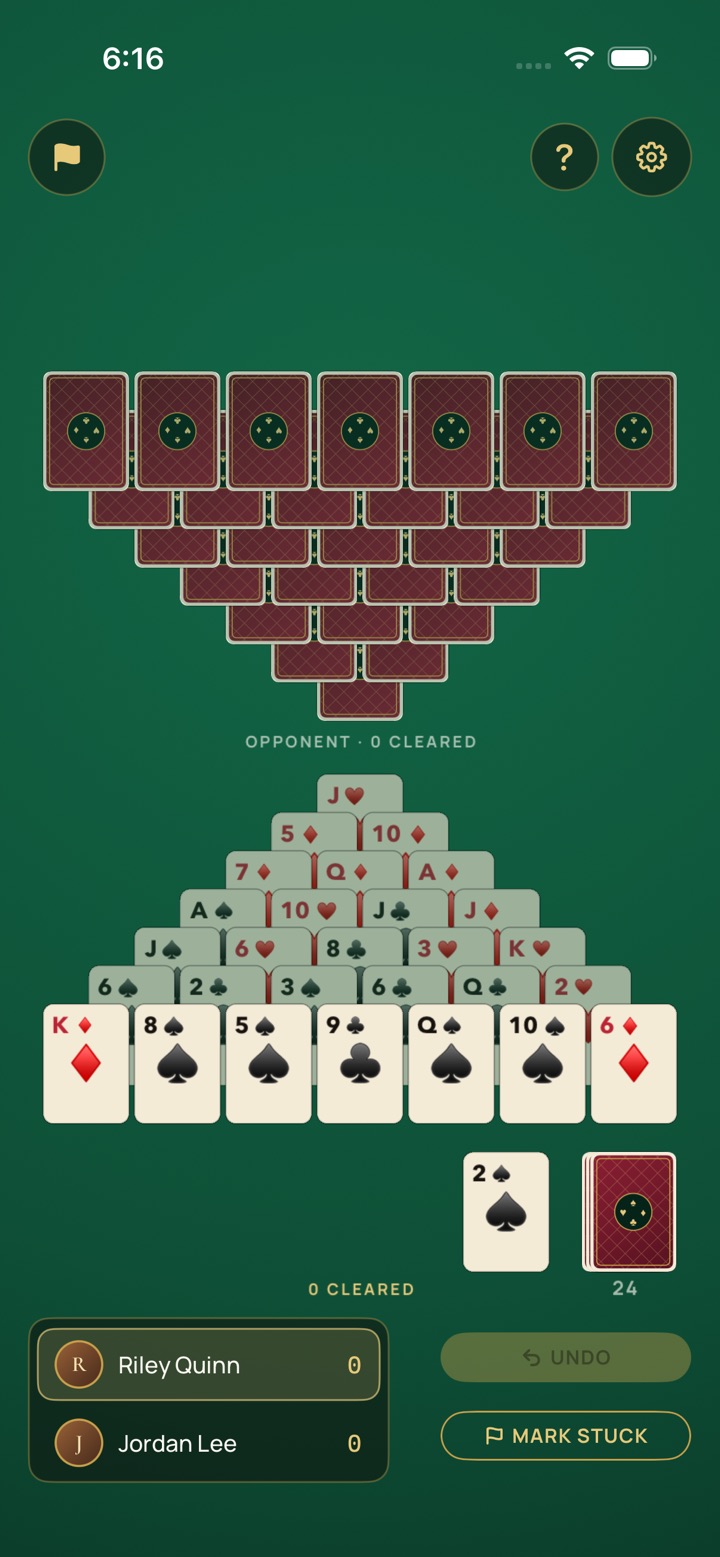
Double Pyramid deals both players the identical board and starts you at the same moment. There is no turn order and no waiting: you are both working the same pyramid, live, and the first to clear all twenty-eight cards wins on the spot.
You can see how far along your opponent is while you play, and you'll know the moment they run out of moves. If you both get stuck — or the match clock runs out — the higher cleared count takes it, and a genuine tie is a draw.
Because the deal is shared, nobody gets the kinder pyramid. The only variable left is which cards you decide to spend, and when.
Play it quietly on your own, or race a real opponent. Quick Match seats you in seconds; private lobbies let you pick who's across the table.
Races deal both players an identical pyramid. Nobody draws the easier board — the only difference is how you play it.
Run a lobby untimed or on a match clock, with reconnect handling that doesn't cost you the game. Solo play whenever you just want a quiet one.